

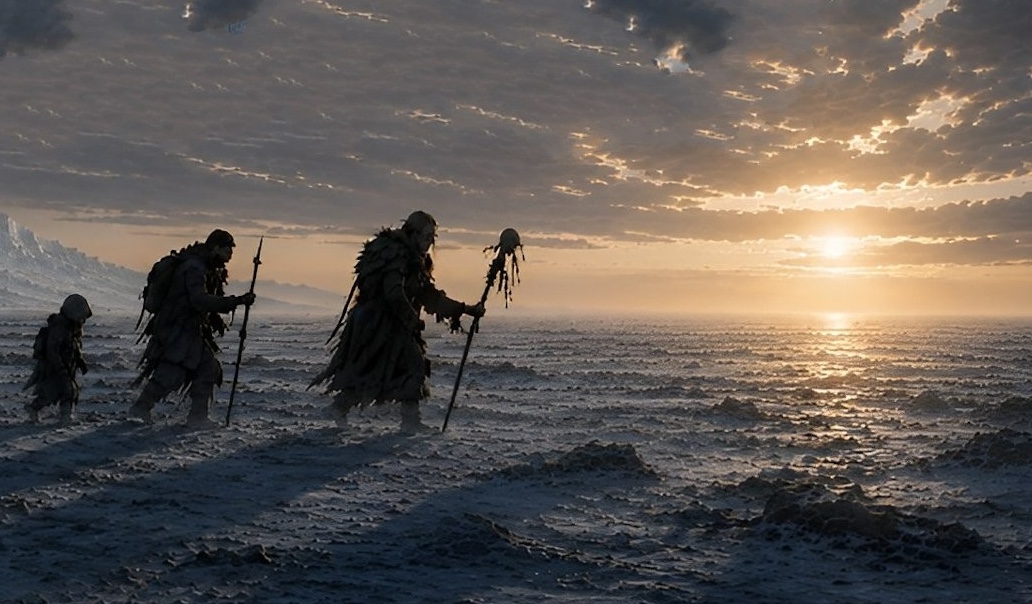

Winter Hunts Us is the debut game from Czech solo developer Ondřej Sysel, who part-time develops under the name Syslí Nora while working full-time as a television screenwriter. After carrying the idea around for nearly a decade, he finally began turning it into a game over the past year. The spark came from an unlikely moment. Watching his son during a swimming lesson, Sysel found himself “genuinely, profoundly bored,” but that boredom quickly turned into a design exercise. “I wanted to let a tribe live in a way that is not unlike life itself,” he says, describing the origins of a survival strategy game shaped by scarcity, migration and difficult trade-offs.
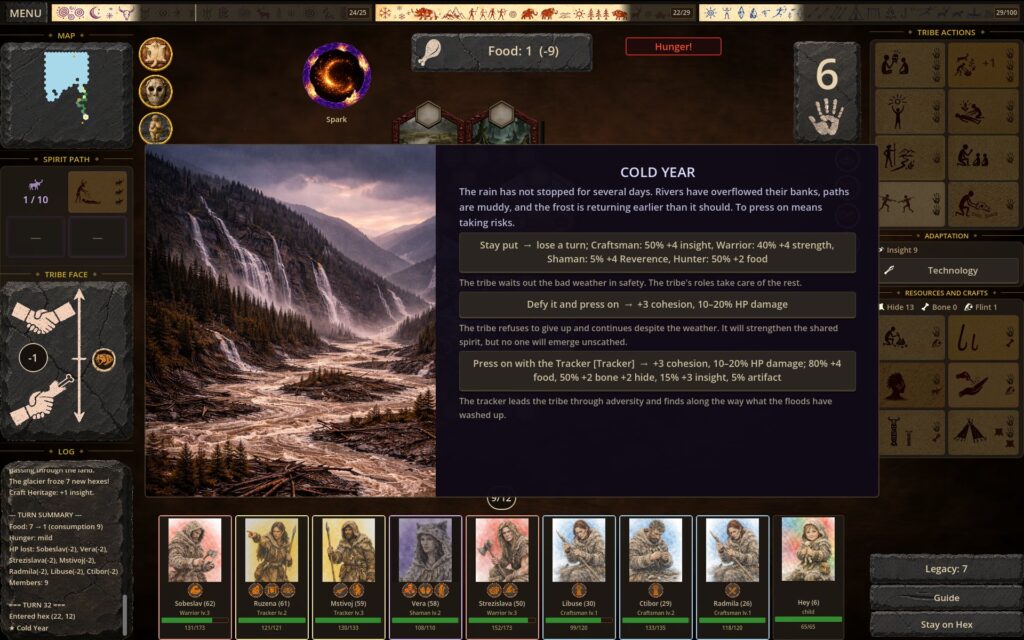
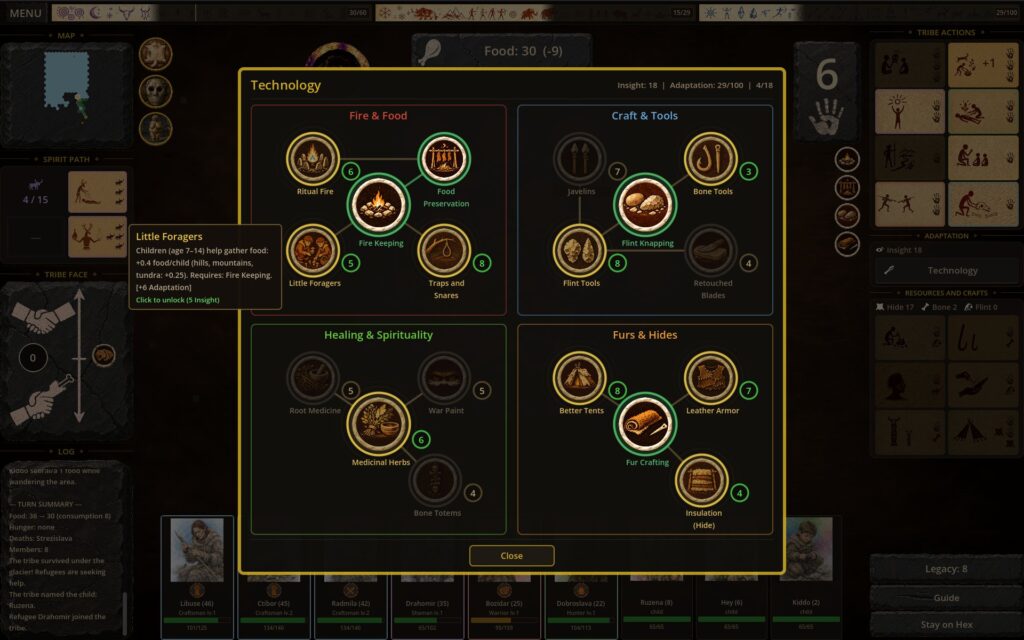
What started as a modest plan to hire a programmer evolved into a largely solo production supported by modern development tools and AI. Sysel describes himself as “basically an amateur when it comes to programming,” yet he has built a surprisingly ambitious project that combines survival mechanics, turn-based combat and generational progression. Development has also been a crash course in the realities of game creation. “I had no idea how much work it takes to make a game that is, if not great, then at least genuinely fun,” he admits.
Why did you become a solo developer?
“For me, becoming a developer is more of a hobby than something I could honestly call a job. Financially speaking, that would make for a very, very modest life. Still, making and releasing my own game has been a dream of mine for about 25 years. I only started taking real steps toward it over the past year. That was when I finally began developing an idea I had been turning over in my head for the better part of a decade. I set aside a small budget with the idea that I would pay a programmer and we would make a simple game together.”
“Looking back, both the plan and the amount of money I set aside were almost comically naive. But then development tools changed dramatically and became much more accessible. I am still basically an amateur when it comes to programming, but that shift allowed me to redirect the money into tools and applications that helped me create something that may not be fully professional, but is certainly far more advanced than what I could have made otherwise.”
What are the biggest advantages of working solo?
“The biggest advantage is the freedom to follow your own vision and set your own pace.”
And the biggest pitfalls?
“Naivety. The kind no one warns you about strongly enough. This is my first game, and only now, during development, am I discovering how limited my original perspective was. I had no idea how much work it takes to make a game that is, if not great, then at least genuinely fun. And I am also learning that making a decent game is far from everything. It may not even be half of the whole process. Marketing is one of those things without which a game almost does not exist at all, but at the same time, I do not have the budget to outsource it.”
“What’s your creative process?
“The creative process took place over many years, while I was imagining how the game could work. I kept thinking about what would make it fun for me, and what felt important to include. But this is one of the big traps of working alone: you do not have other people’s perspectives. I only really started getting those once I had a playable prototype. That was when it became clear how many holes there were in my thinking. So, I am very grateful to everyone who tested the game and was willing to send feedback. I also use artificial intelligence, but not as a generator of finished things. I use it more as a sounding board.”
How do you stay motivated through years of development?
“Because this is a hobby for me, it has one big advantage: there is no pressure that the game has to make a living. On the other hand, when you do not feel like working on it, it can be harder to force yourself. The biggest plus is that I genuinely enjoy playing the game itself. That also makes me enjoy thinking about how to improve it.”
Will you ever work in a team, or is it only solo for you?
“I could imagine working in a team, but there would have to be an extremely strong synergy and a real personal understanding between the people involved. Realistically, I think the chances of that are quite small.”
How did you get the idea for Winter Hunts Us?
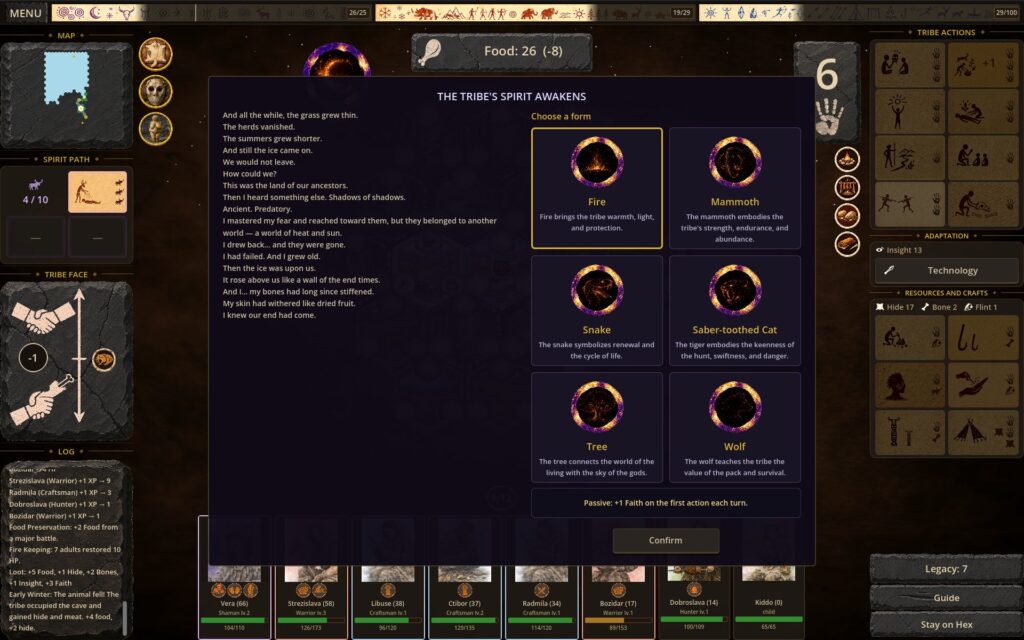
“The first idea came to me while I was with my son at a swimming course, watching him splash around with the other children. I was genuinely, profoundly bored. But that boredom took me on a mental journey into a game I would actually want to play. In short, I wanted to let a tribe live in a way that is not unlike life itself. If I want to explore, I first need to secure enough food. But what if I am in hunting grounds where there is no food? I enjoy the tension between different pressures: the advancing glacier, hunger, ageing, wild predators.”
“And then I discovered something I personally find fascinating, although many players struggle with it: none of the people you start the journey with will live to see victory. In that sense, the game is cruel. Of course, many elements only emerged during development itself, the real turn-based combat, illnesses, learning, and the whole system of victory conditions.”
You use AI for development. How has it helped you with this project?
“Yes, without AI this game would not exist! Or perhaps it would, but only as a very, very simple game. My original budget would have covered maybe two weeks of a programmer’s work, and then that would have been it. Instead, with the help of AI, I was able to create the graphics (although there is still a great deal of manual work involved), a large part of the code and the music.”
“That said, as anyone who has worked with AI probably knows, it is excellent for simple tasks, but its limits become very clear when you move into more complex, conceptual work. I often come across the idea that AI basically made the whole game for me. My backside, sore from all the hours spent sitting and adjusting things, strongly disagrees.”
What is the biggest lesson you have learned from this project?
“This is my first game, so the number of lessons has been enormous. In fact, it was only while making it that I began to understand what it really means to create a functioning game that I am not ashamed to send out into the world. If I had to highlight one lesson, it would be this: I have to be constantly strict with myself and keep trying to reduce the game’s complexity, rather than spreading my creative wings too widely.”
The toll on your mental health can be quite high for a solo dev. How do you deal with that?
“As I mentioned, I do not have the same financial pressure hanging over me. If the game fails, I will lose the equivalent of maybe three months’ salary and the time I could have spent doing other things. What I have found most difficult is the fragmentation of tasks. While I am creating assets, I am also communicating with AI, dealing with marketing emails, coming up with videos that might draw attention to the game and editing those videos, all alongside family, real work and other responsibilities.”
“It is demanding. But at the same time, the creative part is extremely rewarding: taking an idea and turning it into something I can actually play. There is something wonderful about not just playing someone else’s game, but being able to launch your own. I can lead my tribe with the glacier at their backs and try to survive one more turn. Or, at the very least, give a cave bear a tasty snack.”
Winter Hunts Us will release later this year on Steam.