

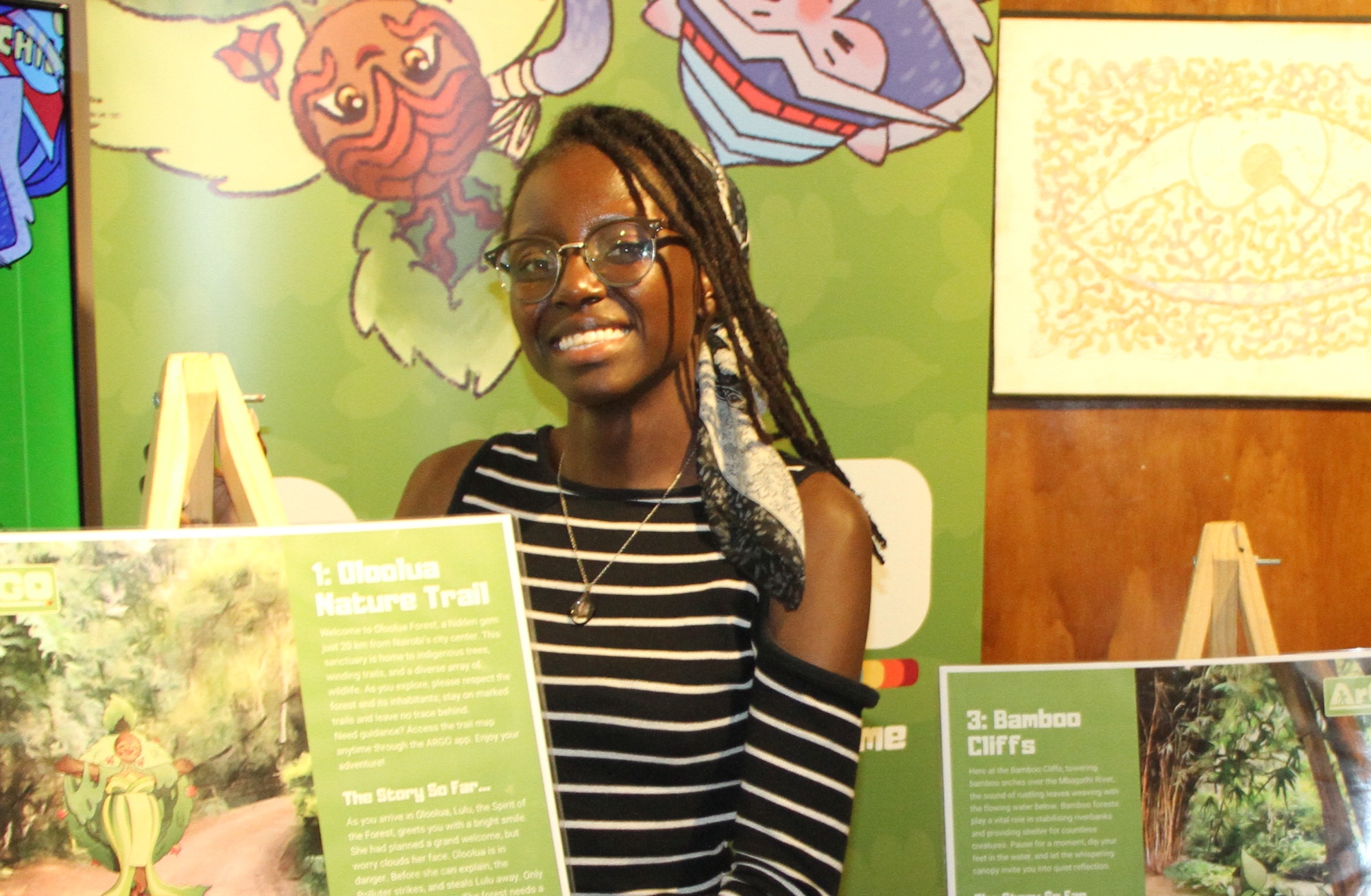

By combining technology, physical interaction and play, Joanna Oluoch, founder of Kenyan-based Sike Studios, created the AR hiking game ArGO that captured the hearts of its players, helped raise money for nature conservation and won the Next Billion Players Award.
Joanna Oluoch, the founder of Kenyan-based Sike Studios, fondly recalls a childhood moment when they were gathered around a Nintendo Wii with visiting family friends from South Africa. “We all got very competitive,” Oluoch recalls. “I remember seeing these adults actually enjoying playing the game. All of us were laughing and giving each other tips. As a child, I used to think adults were boring,” she says with a laugh. “They just wanted to talk about work and watch the news.” But that childhood moment changed everything and continues to stay with her.
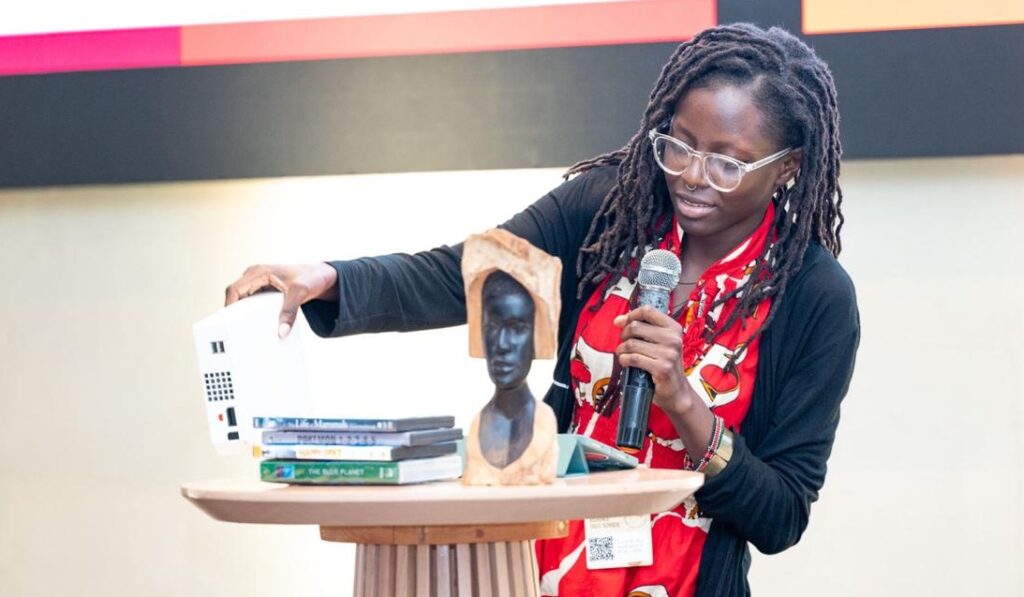
Years later, the idea of games as inclusive, communal, and accessible experiences would shape how she approached game development herself. It would influence not only the kinds of games she wanted to build, but also the kinds of people she wanted those games to welcome. Today, through ArGO, an augmented reality (AR) hiking game that blends storytelling, conservation, and movement, Oluoch is helping reimagine what the African games industry could become.
Next Billion Players
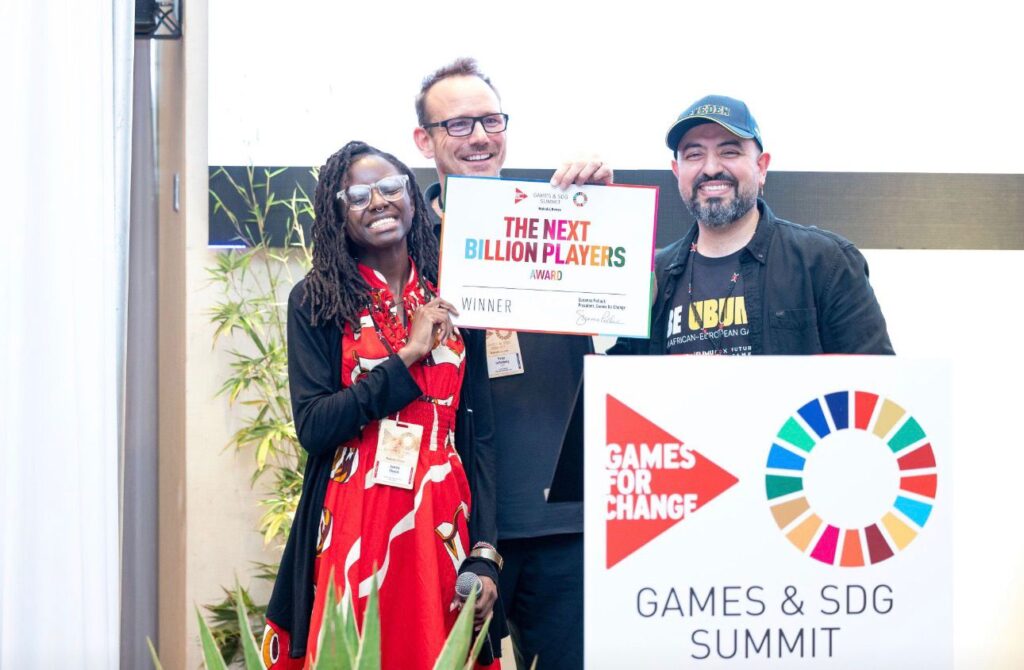
She envisions an industry where more people can see themselves as part of play, regardless of age, background, or whether they even consider themselves ‘gamers’. That vision is already beginning to resonate beyond Kenya. Through ArGO, Oluoch has helped raise KES 5.9 million in funding and in-kind support, primarily directed toward the development of the game, with a portion also supporting conservation efforts at Oloolua Forest, including trail marking. The project also recently earned the Next Billion Players award during the Games and SDG Summit in Africa.
Growing up, games were always present in Oluoch’s life. She would spend hours playing Pokémon on a Nintendo Game Boy with her sister before they eventually got a Nintendo Wii. Looking back, she now realizes how deeply Nintendo’s design philosophy influenced her own work. “I watched this video talking about how the Nintendo Wii was designed to be accessible,” she explains. “Anybody could pick up the remote, no matter your age, background, or where you’re from, and just play the games and enjoy them.” That realization felt strangely familiar. “As I was listening to the video, I was like, wait a minute… this is what I tried with ArGO.”
Engineering Burnout
Despite her love for games and creativity, Oluoch initially pursued engineering. But somewhere along the way, the disconnect between what she was studying and who she felt she was becoming started weighing heavily on her. By her third year in university, burnout had fully set in.“I felt creatively stunted,” she recalls. “I was trying to suppress the side of me that wanted to do art, and it was not working at all.” At one point, she reached her breaking point. Exhausted, homesick and overwhelmed, Oluoch packed her things and told a friend she was leaving university. Unlike many others who had encouraged her to simply push through, her friend responded differently. “She was just like, ‘Yeah, you’re actually a very creative person, and I think you should go for it.’” That moment became a turning point.
Although Oluoch eventually returned to complete her engineering degree, she could no longer ignore the pull toward game development. While working long shifts at a semiconductor factory after graduation, she began teaching herself C# programming late into the night through YouTube tutorials. “Sometimes I’d leave work at 4 a.m., go back to my room, do one of the assignments from the videos, and then sleep,” she says. “I kept doing that for months.” That persistence eventually led her to the GameUp Africa bootcamp and later into the wider African games ecosystem.
Telling her parents, however, was another challenge entirely. “I don’t think I ever flat out told them that I was switching to games,’” she says with a laugh. “I kind of did it slowly, like if you’re trying to sneak out of a place and you don’t want to be spotted. You inch slowly towards the door and then leave.” Coming from a traditional African household, Oluoch understood the fears her parents had around creative careers. But getting paid for her work helped ease those concerns. “Getting paid is the best way to convince African parents that this is something you can do for a living,” she jokes.
Designing ArGO for Public Audiences
As Oluoch’s confidence in game development grew, so did her desire to make games differently. Rather than designing exclusively for hardcore gamers, she became increasingly interested in games that invited participation from wider audiences, including people who had never touched a controller before.
Part of that inspiration came from public art installations she encountered while researching interactive experiences. “There were these pressure plates in a park that would light up or play music when people stepped on them,” she explains. “Kids and adults would just run around playing with them. I remember looking at that and thinking, ‘Wow, I want to make stuff like that.’” That philosophy eventually shaped ArGO.
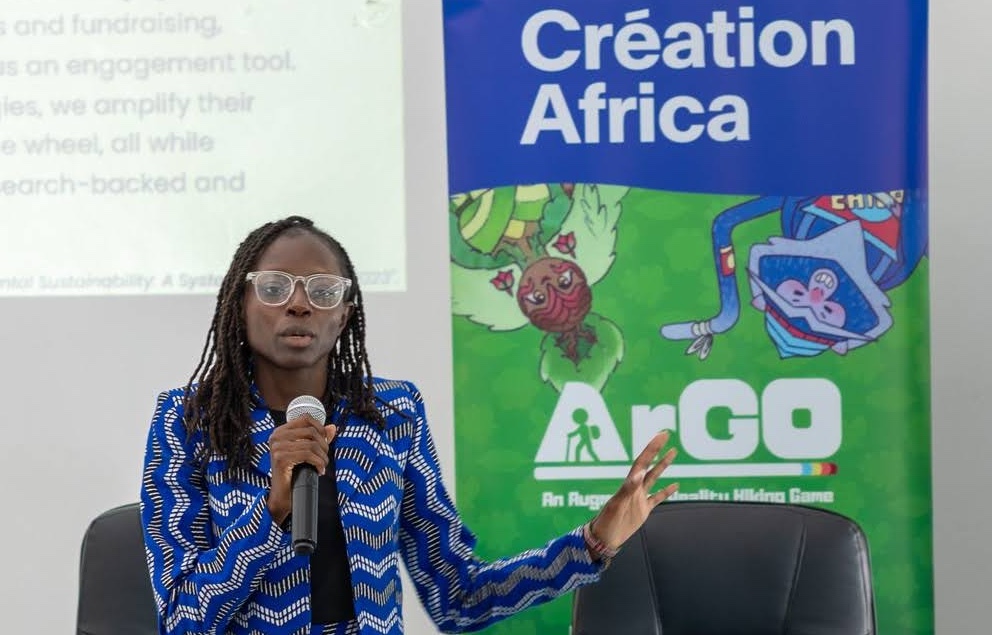
Through exhibitions within and outside traditional gaming spaces, Oluoch discovered that some of the most meaningful interactions came from people who did not identify as gamers at all. “I actually enjoy exhibiting outside game spaces more,” she says. “People interact with the game without preconceived notions or biases.”
Book lovers would carefully read every signboard and piece of story. Children would approach the experience with curiosity and excitement. Meanwhile, seasoned gamers often tried to break the game entirely. “All the exhibitions we’ve done have taught me something,” she says. “They act like playtesting. You hear people complain that the story is too long, so you shorten it. Something glitches, you fix it. That’s how you learn.” To Oluoch, accessibility and fun are not separate ideas. “I want people to be able to pick it up, play it, and enjoy it,” she says. “That’s always been important to me.”
Residencies and Global Collaboration
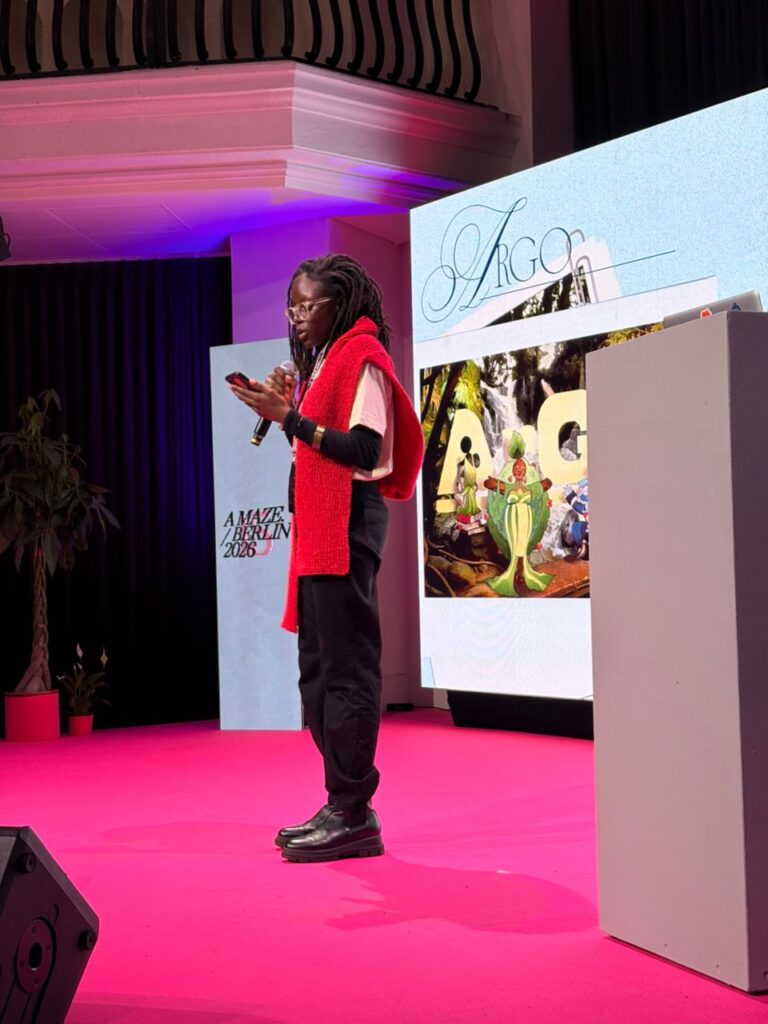
Oluoch’s perspective on games expanded even further through international residencies and initiatives like Playful Obscura in Ghana and Roots & Pixels in Belgium. Playful Obscura is a program under Games Connect Africa which is an initiative by Goethe-Institute that aims to build a stronger, interconnected games industry across Africa. The residency encourages experimentation and challenges creators to think beyond traditional ideas of what games can look or feel like.
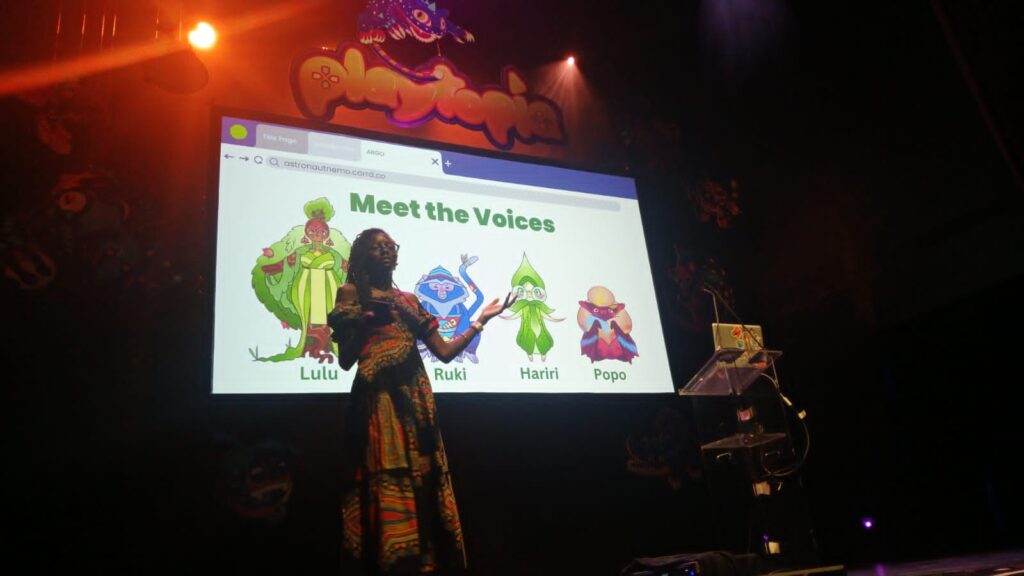
Before joining the programme, Oluoch admits she was not even familiar with the term ‘arthouse games’. “I don’t think I even knew the term arthouse game before the residency,” she says. “So I did a lot of research and started becoming familiar with it until I was like, ‘Oh… I want to make that.’” Arthouse games often focus less on traditional competition or commercial formulas and more on experimentation, artistic expression, emotion, and unconventional ways of interacting with play. The realization connected back to an earlier experience she had at Playtopia, where she encountered experimental game installations that blended electronics, physical interaction, and play in unexpected ways.
One experience in particular stayed with her. “There’s this game called Crashboard,” she recalls. “It’s literally a skateboard with sensors attached to it, and you use it to move through the game space while dodging walls, kind of like Subway Surfers, but on a real skateboard.” The experience was eye-opening for her. “It was really cool because I got to see electronics and games combined,” she says. “At the time, I was still struggling with that aspect of, okay, I did engineering, but now I’m doing games. Is there a way I can use both of them together?”
Tech, physical interaction and play
Despite feeling creatively unfulfilled during her engineering journey, she still deeply appreciated the technical side of it. Seeing interactive installations like Crashboard helped her realize that technology, physical interaction, and play did not have to exist separately. “I still loved engineering,” she explains. “So seeing something like that made me realize I could merge both worlds.” The residency itself deepened those ideas even further. In Ghana, Oluoch found herself surrounded by African creatives equally passionate about experimentation, collaboration, and pushing the boundaries of interactive media. “It was so nice because we could just sit there and make games,” she recalls. “If someone had an issue, we’d all gather around and brainstorm together.”
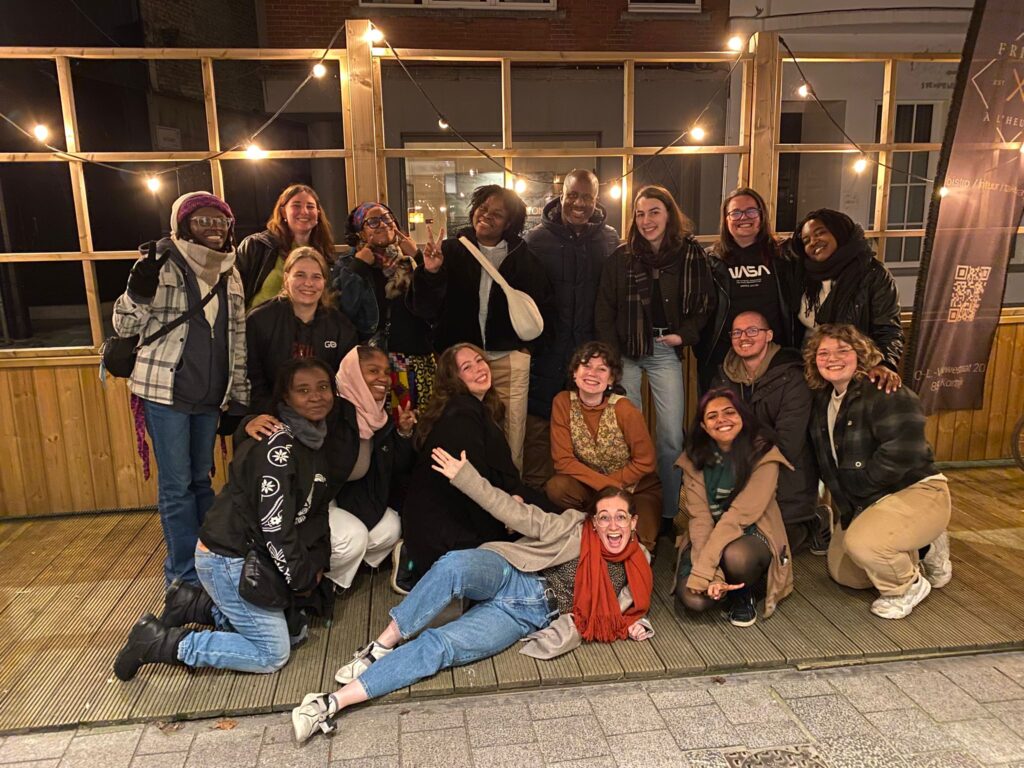
Freed from the constant administrative pressures of production work, Oluoch rediscovered the joy of simply creating. “I didn’t really feel creative anymore when I was working on ArGO,” she admits. “I felt caught in this administrative loop.” The residency changed that. “It offered a break to breathe and just create, which is what I came into games to do in the first place.” Her experience later continued through Roots & Pixels, an initiative designed to bring together female-identifying game developers from Belgium, Kenya, Uganda, and South Africa for a two-week training and exchange programme hosted in Kortrijk, Belgium.
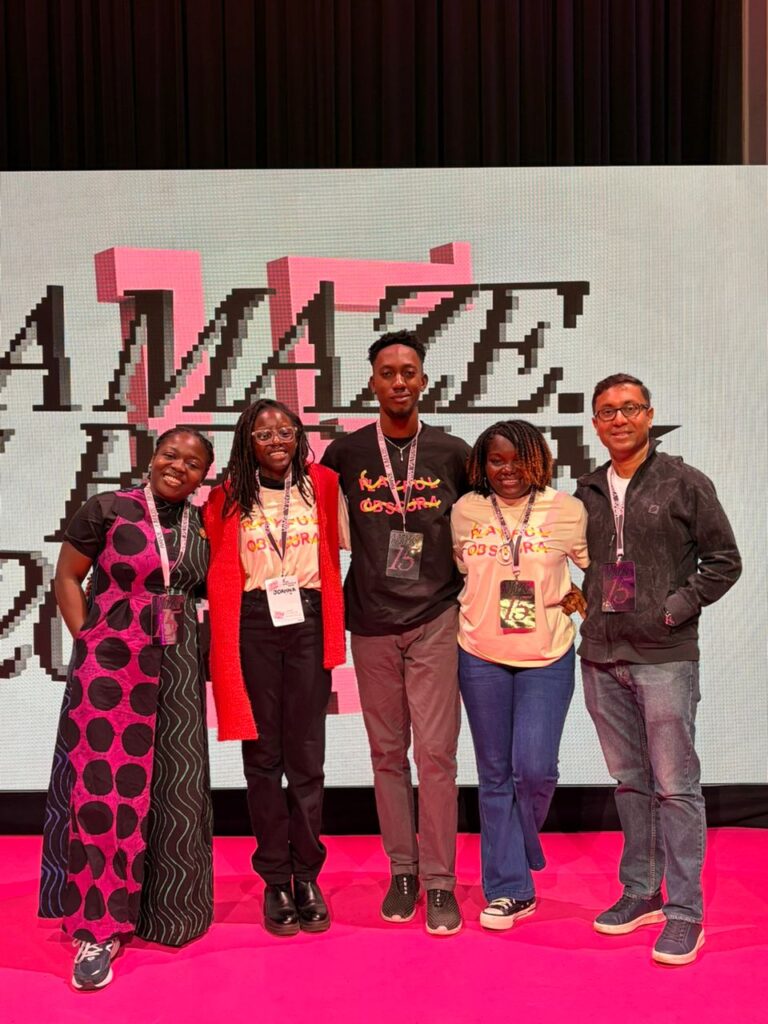
The initiative focused on mentorship, collaboration, industry exposure, and creative exchange between developers from different regions. The programme became another reminder of how transformative collaborative spaces can be. More importantly, those experiences revealed how powerful creative ecosystems could become when communities intentionally supported one another.
Sustainability requires Community
For Oluoch, building games is only part of the bigger conversation. The sustainability of African game studios and creative ecosystems matters just as much. After attending initiatives like Roots & Pixels and observing ecosystems in places like Belgium, Ghana, South Africa, and Nigeria, she began noticing patterns. “What are they doing that we’re not doing?” she wondered. “Why are some studios sustainable while others struggle?” The answer, she believes, lies in community infrastructure.
Oluoch observed how ecosystems become stronger when creators, educators, institutions, and businesses actively support one another. She also emphasizes the importance of sustainability beyond grants and temporary funding. “You can’t take care of other people if you don’t take care of yourself first,” she says. For Oluoch, that means advocating not only for healthier studios and better business practices, but also for communities where developers feel supported creatively and emotionally.
Standing Her Ground
One of the biggest lessons Oluoch has learned throughout her journey is the importance of protecting her vision. “If I could speak to my younger self, I’d tell her to stand her ground,” she says. “There were moments where I doubted myself,” she admits. “I wondered if it was really a good idea to build it this way.” But recognition for the project eventually validated those instincts. “Getting the Next Billion Players recognition felt like validation for all those times I stood my ground,” she says.
Today, through her growing journey into arthouse games and interactive experiences, Oluoch continues building toward a future where games feel less intimidating, more communal, and more open to everyone. Her work consistently returns to the same idea she first encountered as a child watching adults laugh together around a Nintendo Wii: Games belong to everyone.
For those interested in following ArGO’s journey, Oluoch encourages people to sign up for the project’s mailing list to keep up with future updates, events, and opportunities surrounding the experience. She also welcomes schools, communities, and event organisers interested in bringing ArGO to their spaces to reach out and connect with the team.