

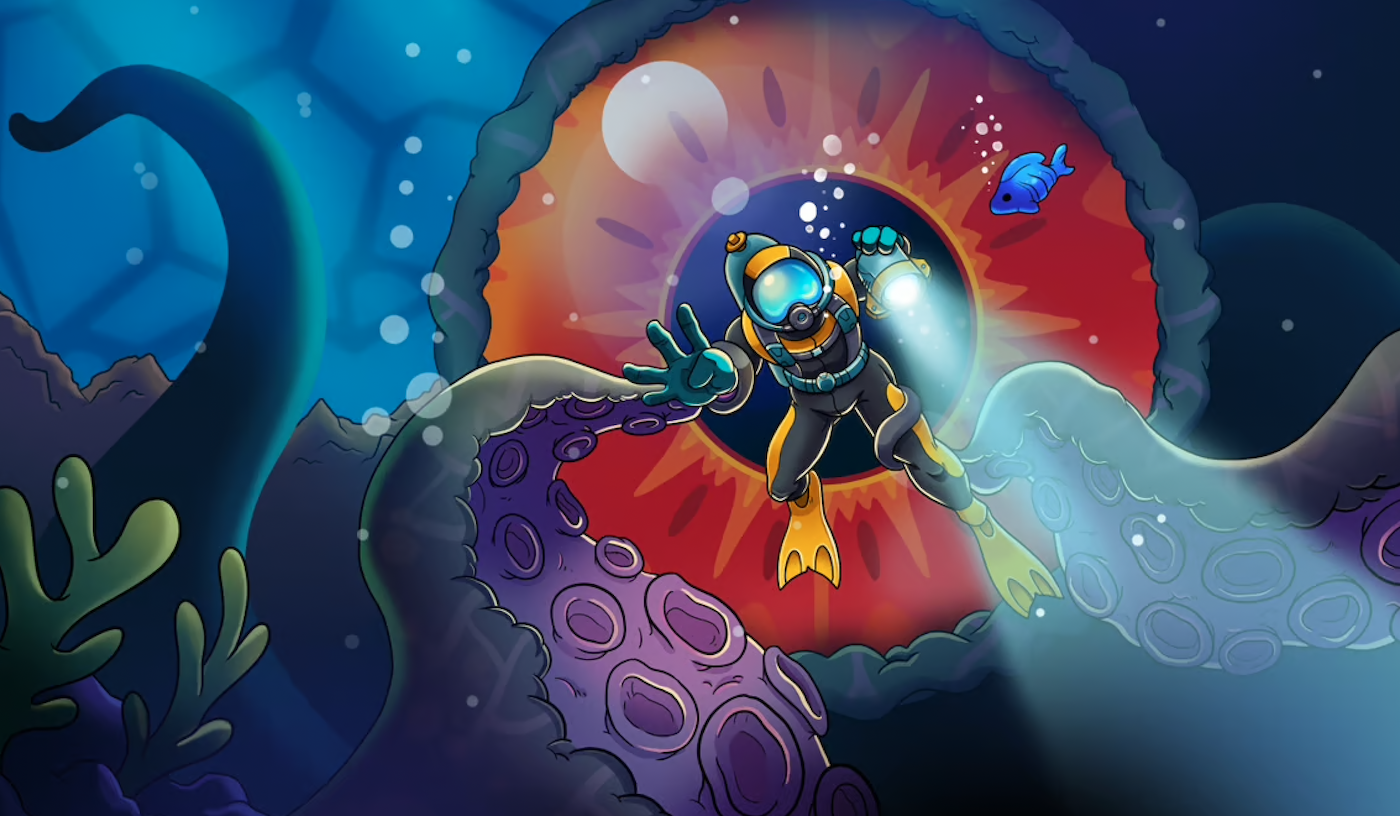

Here at PreMortem.Games, we have great admiration for developers who tackle the entire game development cycle on their own. Because, let’s be honest, creating games is hard and it takes a special kind of developer to choose the solo path. This year, we featured 11 inspiring creators in our Solo Developers-series and we love to share some of their highlights in these final days of the year.
Perseverance
Esteban Hernandez, the solo developer behind MKSM Design, has spent almost seven years bringing Creo God Simulator to life. What started as a passion project has grown into a full-fledged god game blending city-building, resource management and player-driven storytelling. “I became a solo developer initially because I wanted to make games, plain and simple,” he says. However, Hernandez admits that solo development sometimes takes a toll on his metal health. “I try my best to accept that I may not be the most talented or brilliant game developer in the world, but that I am capable of making something fun and beautiful.”
Dev on a boat
Young Dutch indie developer Lente is something of a free spirit. Growing up living on a ship made a profound impression on her, leading her to buy an old boat for herself. After renovating it together with her mother, she now lives and works there. On Twitter, she’s known to her 22K+ followers as ‘dev on a boat’. Her game, Spilled!, is a cozy experience centered around cleaning up oil spills with a boat. “I grew up very close to nature and always quickly noticed when things weren’t the way they were supposed to be”, she says. “Making an eco-conscious game just really made sense to me.”
Beyond Fruit Ninja
Luke Muscat is no stranger to success in the mobile gaming world. As the creative mind behind Jetpack Joyride and Fruit Ninja, he helped define an era of pick-up-and-play hits. But after more than a decade leading teams at three different companies, Muscat felt his personal growth stagnating. “I had never actually shipped any gameplay features with code I had written,” he says. Determined to push himself, he embarked on a new path as a solo developer. After several attempts, he landed on Feed the Deep, a 2D deep-sea diving roguelike with procedurally generated caves, which launched in August 2024.
King of niche
Joe Cassavaugh’s story stands out as a unique and unconventional solo developer journey. After years working behind the scenes at iWin on successful casual titles like Mah Jong Quest and contributing to franchises like Jewel Quest, Cassavaugh struck out on his own in 2009. “My future wife turned to me and asked: ‘Can you do these games on your own?’ and I answered: ‘Not quite, but something close enough.’” That moment eventually led to the birth of Clutter, a now 18-game franchise that has quietly built a loyal following and defined its own subgenre within the hidden object space. By staying lean, avoiding creative bottlenecks and delivering consistently, Joe Cassavaugh (“The Joe in Puzzles by Joe!”) has grown Clutter into a sustainable solo business, earning over $200K annually and proving there’s still room for alternative paths to success in game development.
Interactive nightmare
Jason Priskomatis, the solo developer behind EJETA Studios, always enjoyed playing video games, ever since he was young. “It was always my escape, a comfort place,” he says. While studying Information Technology in Athens, Greece, he created a small game for his thesis. “It was nothing special, but it was enough to make me fall in love with the process of creating something that other people can play and enjoy.” That passion led to Friday Nights, his debut horror game featuring voice recognition, designed to immerse players in a uniquely interactive nightmare. For now, he’s happy in the solo dev life, but: “I would love to work in a team and share a common passion with other people… if I find the right people.”
Post-release depression
Belgian solo developer Thomas Waterzooi didn’t start his journey with a master plan, just a growing dissatisfaction with the AAA game industry and a desire to create something more meaningful. “I didn’t want to continue working on these AAA titles where violence was often the main mechanic,” he recalls of his time freelancing on the Hitman series. When that job came to an end, in 2016, Waterzooi found himself at a crossroads. A manifesto about making games for ‘a new audience’ helped him finally take the leap. “Then I knew I needed to pick a topic that my mom and non-gaming friends would also find interesting: modern art!” That leap led to Please, Touch The Artwork, a meditative puzzler that struck a chord with players and platform curators alike. After Please, Touch The Artwork 1 & 2, he announced his next game Please, Watch The Artwork at the Day of the Devs stream.
Getting it done
Eugene, the solo developer behind Voidmaw, has spent three years crafting Katanaut, a fast-paced action-roguelite where players embody a katana-wielding astronaut fighting to escape a collapsing space station. As a one-person team, he embraces both the creative freedom and the intense challenges that come with solo development. “I’ve always loved creating things, and game development felt like the perfect mix of art, storytelling, and problem-solving,” he explains. His biggest takeaway from the development? “That done is better than perfect. It’s easy to get stuck chasing perfection, but games are meant to be played, not just endlessly tweaked.”
Ten years journey
After more than a decade of late nights, spreadsheets and stubborn persistence, solo developer Yannick Audéoud, working as Misty Whale, has finally released his debut puzzle game Orbyss. What began as “just a hobby at the time” during his computer engineering studies gradually transformed into “a serious and commercial project.” Working entirely in his spare time, Audéoud never really planned to go solo. “it just happened, because that’s how I started the project, before knowing that it would take years.” Without a deadline or financial pressure, Orbyss became a marathon of self-motivation, one that at times took a mental toll. “Psychologically, it was really hard. Not finishing a project for many years was difficult to deal with,” says Audéoud. His inventive solution? Read the article!
Always on
Canadian developer Lincoln McCulloch, working under the studio name Uncle Grouch Gaming, spent the last six years creating the upcoming Dungeons & Kingdoms. An ambitious game that combines medieval city building and kingdom defense with ARPG combat and monster hunting. “So, I basically made the game I’ve always wanted to play,” says McCulloch. The game launched in Early Access in November and has quite a journey ahead still. “Once D&K is completed, I imagine I’ll be able to properly reflect on everything. Now I just keep going.”
Rats everywhere
Brian James Murphy didn’t exactly plan to become a solo developer. He more or less fell into it face-first when he lost his job during the great industry layoff wave of 2024. He had been tinkering with something on the side for years, fuelled by his love for rats. Yes, the rodents. “I’ve been drawing rats for as long as I can remember,” he says. “And I was even nicknamed Rat King in high school!” So when he finally had the time, this was his moment. “I dived right in as a half-desperation half-passion project.” One and a half years later, his debut game Rat Wars: The Rat ’Em Up is ready. “I absolutely love it and know in my heart of hearts this is what I want to do with my life from now on.”
Experimentation and learning
For Argyro Brotsi, it wasn’t really a conscious choice to create a game by herself. “I didn’t originally plan to become a solo developer, it happened naturally through experimentation and learning.” Now working under the name Pofupofu Studios, Brotsi is developing Seina: A Tale of Spirits, her debut game and first full-time solo project. What began as a process of learning and experimentation has grown into what she describes as “a challenging but deeply creative experience.” One that allows her to work at her own pace while building a world where players can “explore peacefully, feel calm and connect with nature.”