

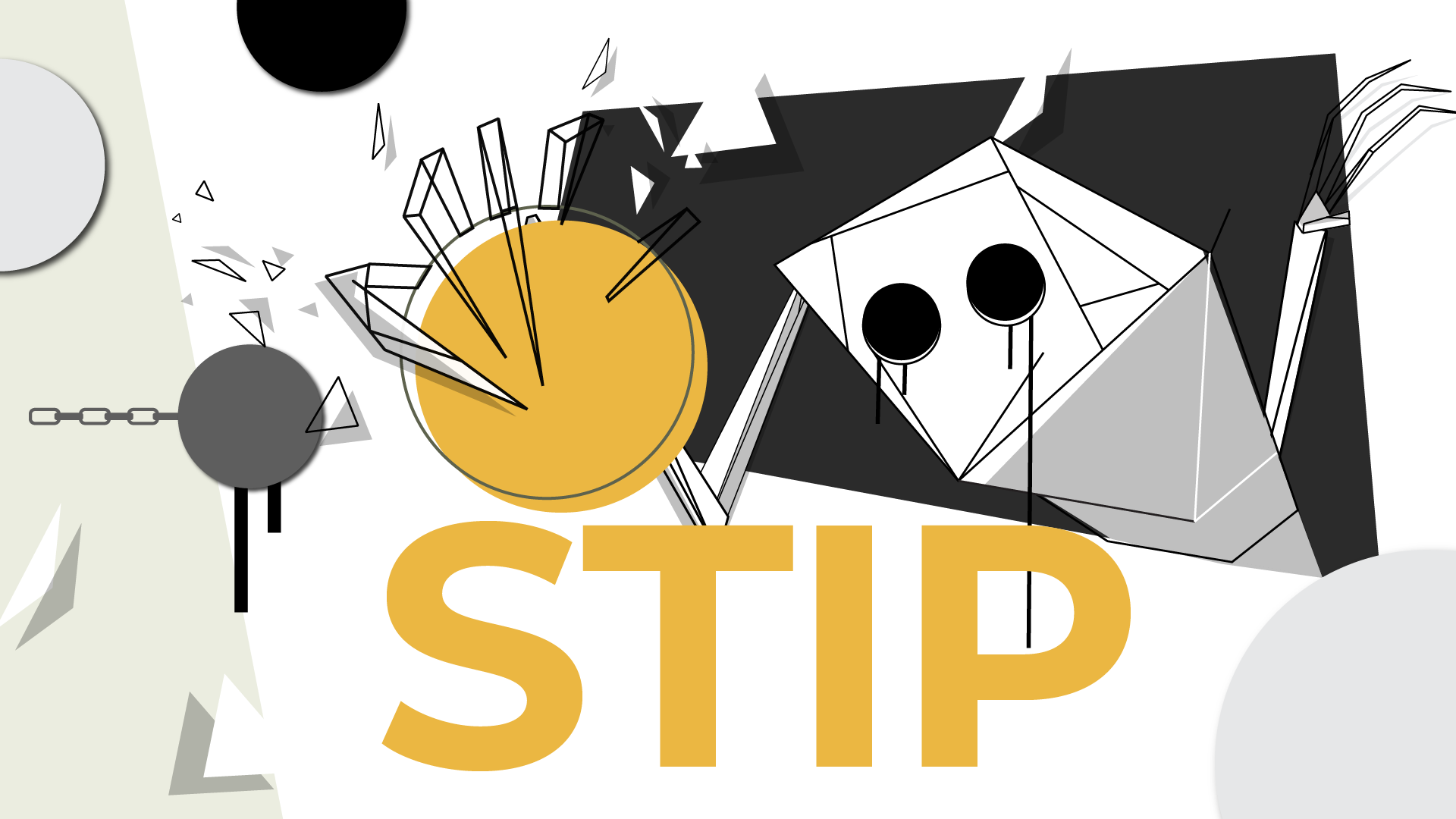

Belgian solo developer Sam Agten is not chasing the next big indie hit. To be honest, he just wants to make a game that his mother would enjoy playing. “So I made Stip, a number puzzle game!,” he says, smiling. “And, as is often the case, that quickly spiraled out of control into something demented.” After spending years working on the hacking RPG Midnight Protocol, he looked for a new project that would satisfy his urge for a technical challenge. “Stip is this mathematical wonderland filled with historical scientists,” he explains. “But it’s also a game that openly and desperately craves your attention.”
For Agten, working under the name Sixtyfour, solo development offers him the freedom to prototype rapidly without game design documents or market strategies, though he’s quick to point out there’s no such thing as a true solo developer: “Good games are not developed in a vacuum.” He collaborates with composers, discusses programming with peers and lets his kids “break my UI.” The hardest part? “Having the guts to finish and release the game.” It’s a lesson he admits he keeps relearning: “Stip should have been released already.”
Why did you become a solo developer?
“I worked at a game company before I became a solo developer and after that I went back to a ‘real’ job out of necessity. But once a game developer, always a game developer. I still had that itch to scratch, so I went about developing my own games after hours. I wanted to make games and I needed to be flexible in my hours so being a solo developer was just a natural fit, I suppose.”
What are the biggest advantages of working solo?
“No game design document, no consult before rapidly prototyping a new idea, I work at my own pace, I get to make what I want to make without worrying about market strategies or worrying that an idea will get lost in translation. I’m in it for the experiences and the people!”
And the biggest pitfalls?
“Making games takes a lot of time. Work on something that keeps you motivated, and by all accounts, that is not that huge dream game you have in mind. Working on something creative by yourself also means there has to come a time you have to show that work to others and that can be a terrifying moment because the game is never done. You can get trapped in your own head. Battle-test your ideas early, cut down on as many features as you possibly can. Having less accountability as a solo-dev also means having the guts to finish and release the game and that is definitely the hardest part.”
What’s your creative process?
“The new idea is always cooler and more exciting to work on. I stop myself from working on something for at least a month, and if I’m still thinking about it, it means it is probably something I can work on for a long time. This doesn’t mean the game idea is marketable or ‘can work as a gif’, or <insert whatever other marketing tactic you’ll find for cheap on social media>, but it is something I’m excited about. I think ideas are cheap. Everybody has ideas, and if you don’t, go out there and play games, have experiences, live your life. Any artist can only work from lived experiences. Boiling those ideas down to something you can feasibly do and stay motivated for, that’s the hard part.”
How do you stay motivated through (years of) development?
“I have a few things that I do to keep myself motivated:
– I go to social events where other indie game developers are hanging out. Seeing what other developers are working on in your region and talking about shared pain can really help. It’s also a great way to set up collaborations!
– I take breaks! On long projects, I often feel the need to take a few weeks to just bang out a prototype or maybe even freelance for a bit, just to come back to the project reinvigorated!
– Most events are not worth your time if you are angling for wishlists, but it is a great way to connect with your audience. Someone who does not know you coming up to you to say they really like your game or asking for your opinion for an interview can be a much needed moral boost!
– I need a technical challenge to keep me motivated as well. I like learning new technology, ways of working, and such. On a surface level, not every project has that but there always seems to be an opportunity to get sucked into some kind of rabbit hole like porting your own game to a console and I’ll happily jump on those opportunities.”
Will you ever work in a team or is it only solo for you?
“I don’t have any ambition to hire staff, but there is no such thing as a true solo developer. Or, at least, there shouldn’t be, in my opinion. Good games are not developed in a vacuum. I work with composers on the music, I discuss my programming with programmers at other game companies, I ask for advice on art from artists, I let my kids break my UI, etcetera. I work from home mostly, but I also work at a co-working space with peers or go to local playtesting events. I’m excited about the idea of collaborations. Working with people you admire is a goal not just an opportunity.”
How did you get the idea for Stip?
“Before Stip, I made a game called Midnight Protocol, which is a hacking RPG. I love that project but after putting a few years of my life into that, I wanted to make a game my mother would enjoy. So I made a number puzzle game! And, as is often the case, that quickly spiraled out of control into something demented.”
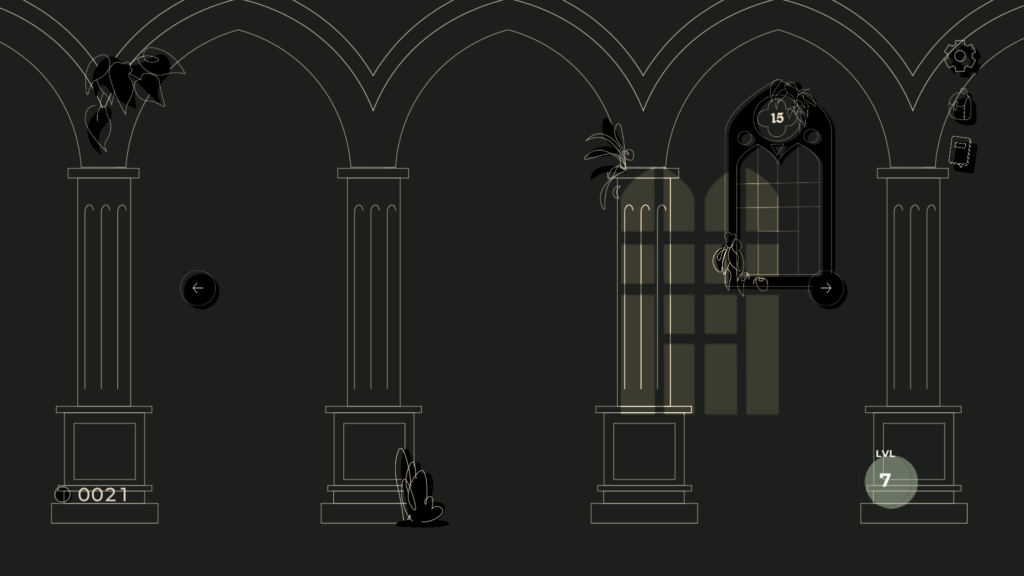
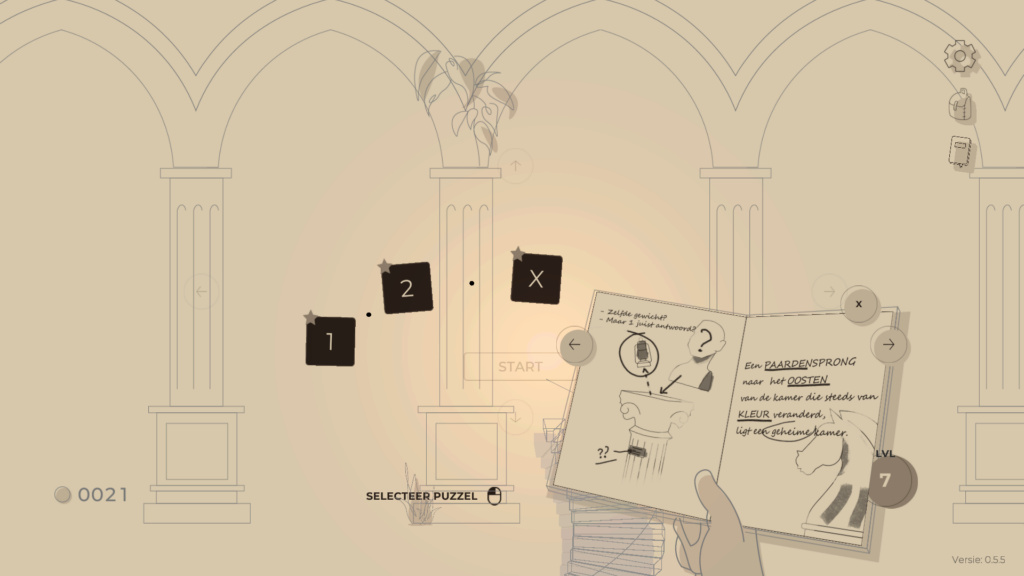
“Stip is this mathematical wonderland filled with historical scientists. I hope that in itself is unique, but it’s also a game that openly and desperately craves your attention and demands it in ways that are meant to be reminiscent of how a misguided AI or board of directors would go about it. If that lands in some way for someone out there, I’ll consider the project a success.”
What’s the biggest lesson learned from this project?
“I feel like it’s the same lesson every time and the same lesson every developer out there keeps preaching about: Stip should have been released already. For me it comes down to lacking the courage to cut down the idea into a sufficiently smaller idea, needing to spend more time at making the pacing tighter and being content with it ending in maybe not the grand way you intended when you started the project. I’m sure someday I’ll learn. For every would-be solo developer out there: finishing a game at all is an achievement in and of it itself.”
Stip was named the most anticipated game at the Belgian Game Awards. Did that put extra pressure on you?
“That award was wholly unexpected. I like Stip, of course I do, but at this point it’s hard for me to look past its flaws. I was lucky the experience resonated with some of the jury members and I’m sure that could have just as easily swung the other way. It is very gratifying as a designer to see someone connect with your idea and, yes, that is very daunting as well! I’m definitely feeling the heat!”

The toll on your mental health can be quite high for solo devs. How do you deal with that?
“I think a big part of it is that I’m not thinking about making the next big Indie-Hit. We all started in this industry out of a love for video games and it is important to hold onto that. I don’t enjoy every part of the process, nobody does. There are parts about game development that really suck! I’m lucky enough to have family and friends that are really proud of what I do and help me point out all the cool stuff I’ve got to experience thanks to being in this industry. I’ve learned to redefine my measure of success and that’s been instrumental in consistently finding enjoyment in what I do.”
Stip will be released later this year.