

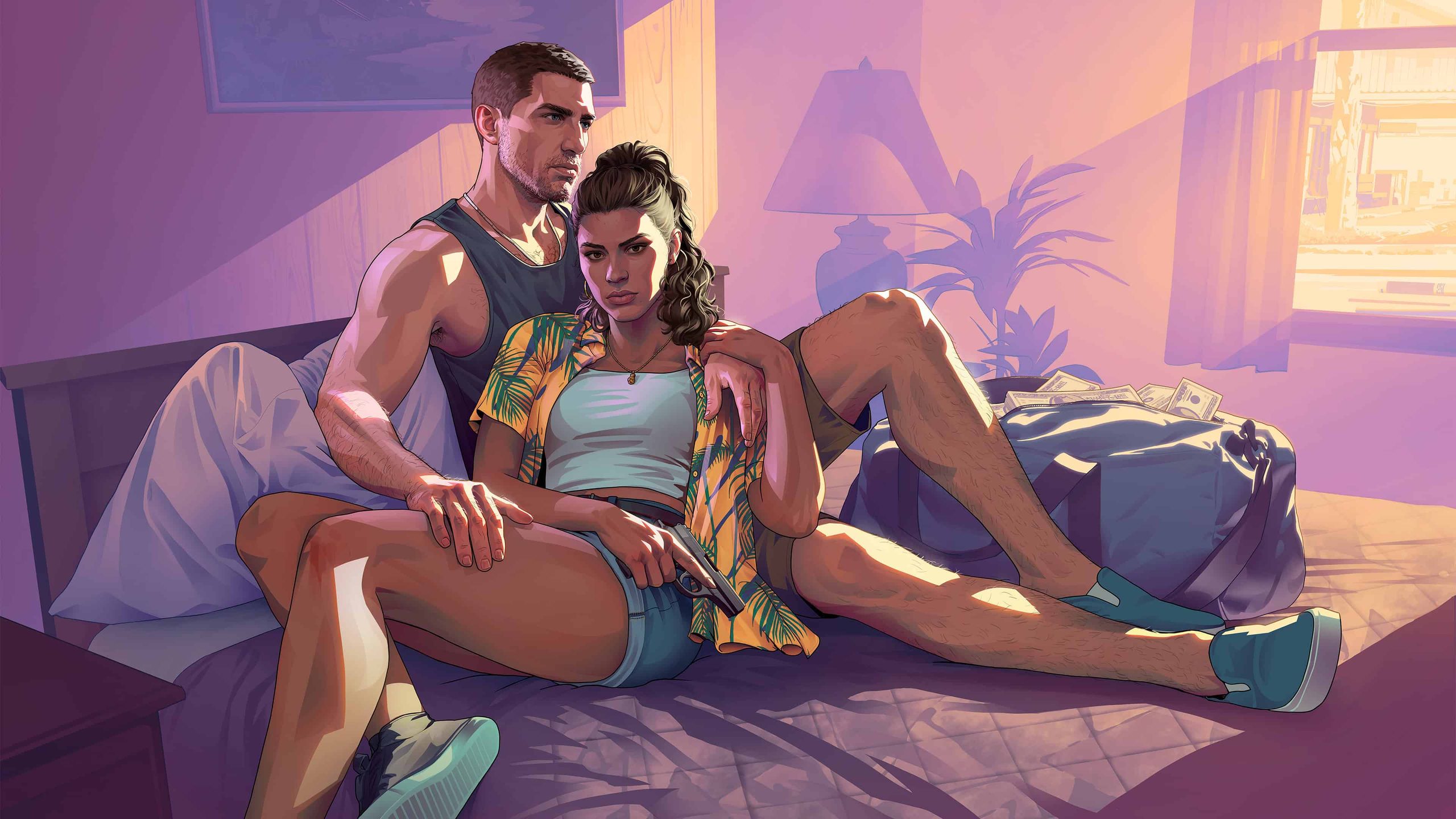

The timeline between versions five and six of one of gaming’s defining franchises tells more than the story of another release. It documents a key period in how interactive entertainment, and the world around it, has evolved. To the casual observer, the most interesting question seems to be how many copies it will sell. It squarely measures the wrong thing.
Sure enough, units and profit are what even Zelnick himself says he’ll be judged on. Investors are clear about their anxiety around risk and the cost of blockbuster game development. Since GTA V, which cost $265 million to develop and market, the average budget for AAA productions has ballooned to well over $400 million. Once demand stopped growing as it did during the pandemic, costs became top of mind. Given the steady cadence of layoffs and divestitures across the industry, that’s understandable, especially as development costs rose fourfold while the sales window shrank.

Even so, total units sold tells only half the story. Or, more accurately, only 54 percent.
Over the past decade, Take-Two has found it can make another 46 percent post-release by releasing expansions and selling in-game currency and items. Extending the experience beyond a traditional single-player mode effectively reduced the financial risks tied to a single, time-limited release. It spreads the risk over a longer period, allows more frequent iterations and updates, and has high upsell potential post-release.
Since figuring this out, the firm has completed a transition from its origin as a conventional publisher, developing a title in secret and then selling as many copies as possible in a two- to three-week window, to something else entirely.
Blowout success
In 2013, AAA titles were discrete entertainment products. As blockbusters go, GTA V was a blowout success, generating $1 billion in its first three days. At the time, the expectation was that the franchise would also try to benefit from the more recently emerged trend in online multiplayer gameplay. Take-Two had historically been deliberately slow in adapting to novel technologies, which is exactly why nobody expected the next part to work.

When GTA Online launched two weeks later, however, it melted Rockstar’s servers but, to many people’s surprise, would gradually become the business. By 2018, the online component was earning more than the game’s sales. It peaked around $664 million a year in 2021 and still does roughly $400 million thirteen years on.
That shift occurred across the whole industry. When GTA V came out, Fortnite didn’t exist, Roblox was a curiosity, and few at Take-Two had even considered its now-favorite phrase, “recurrent consumer spending.”
Today it is the firm’s pride and joy during earnings calls. Over a decade, games stopped being finite products and became digital destinations: online places you visit regularly.
Love story
An important contributor to GTA’s popularity is its seemingly senseless violence. The car-stealing, gun-shooting action that draws players in is also what attracts its critics. And although most outlets will characterize the game as a crime simulator, it would be naive to focus only on the violence.
You wouldn’t think it, but the game builds on and borrows from an incredibly rich tradition of writers, cinematographers, musicians, and other artists. Violence in any form of entertainment is a powerful storytelling device. Take the film Rocky, which turns fifty this month and is remembered as a gritty boxing movie even though Stallone fights only twice in the entire film. In his new memoir, Stallone calls it “a love story about regular people looking for dignity and respect.”
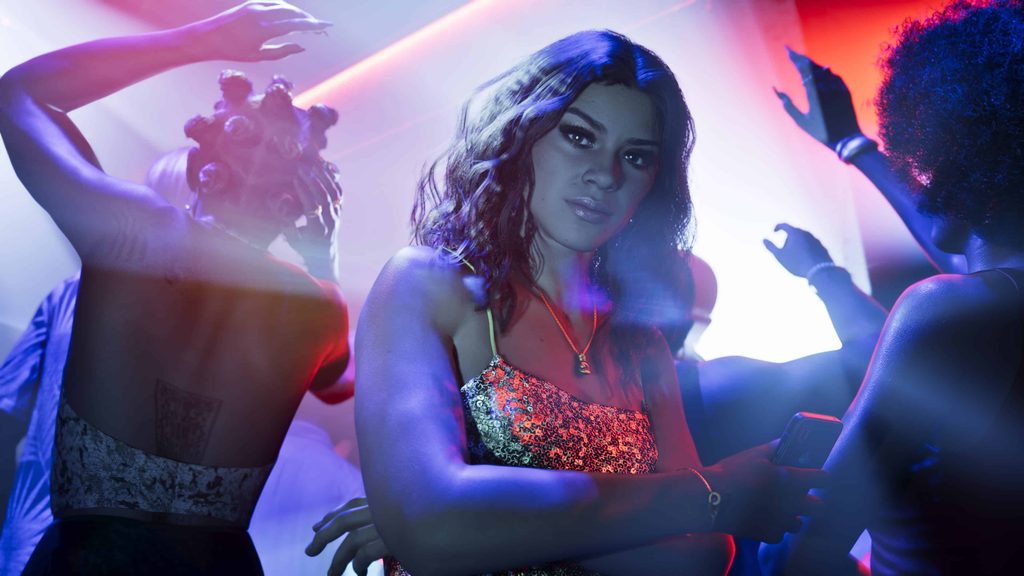
The idea that a popular game could have more depth than the bludgeoning on the surface may seem like a stretch. But for all its carjackings, shootouts, and general disregard for polite society, Grand Theft Auto has always been a story about individuals trying to realize their version of the American Dream. But as its audience has grown up, so has its cultural resonance matured. It also holds up a mirror.
For thirty years, GTA pointed its satire outward, at American culture, on behalf of a core audience of young men. This time the lens turns around. The biggest game ever made is a love story, featuring the franchise’s first female lead, as millions of die-hard players are about to spend half their time as a woman of color. The skeptics are asked to look past the violence. The fans are asked to look at themselves.
Flower in a Hurricane
Video games today no longer simply borrow from popular culture. Increasingly, they’re shaping it. Hollywood’s growing appetite for video game adaptations is one example. Music offers another.
Throughout the series, its radio stations have been integral to the experience and have done much more than set the mood. Since much of GTA’s gameplay involves driving between destinations, curated playlists help players transition from one area on the map to the next.
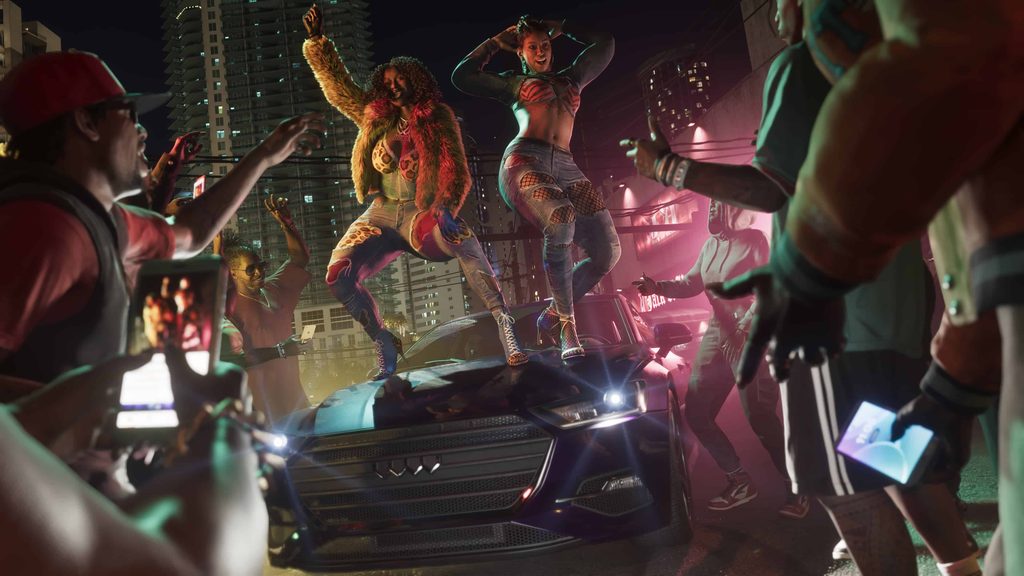
In GTA V, for example, each of the twenty-two available stations offers a different snapshot of a real Los Angeles scene. To make this as genuine as possible, Rockstar asked a musician called Flying Lotus to curate the FlyLo FM radio station. Filling it with local artists meant the game hosted an actual LA club scene, blurring the lines between Los Santos and Los Angeles.
With GTA VI, that exchange will increasingly run in reverse: where V imported a music scene into the game, VI is developing its own, ready to play everywhere else. We can see an early indication of what that may look like in the popularity of songs released alongside the game’s previews. Following the Extended Look, I analyzed daily streaming data from Chartmetric. I compared streaming activity during the week before the preview with the week following its release.

The results are striking.
Collectively, the fourteen songs generated 8.8 million additional Spotify streams, an increase of 147 percent. Two tracks accounted for much of that growth, but even without them, the increase was 60 percent.
More interesting is the discovery effect. For an established artist, a few thousand additional streams are statistical noise. But for a largely forgotten song from 1988, they can introduce an entirely new audience. Phil Collins, for instance, saw his streams decline, while Skrilla and Pound Town gained 23 and 24 percent, respectively. Meanwhile, the five songs with fewer than 100,000 weekly streams, including Prefab Sprout’s “Cars and Girls”, saw their streams triple.
GTA VI, in other words, is already shaping what people listen to before anyone has even played the game.
But will it sell?
With an estimated 10 million pre-orders and an average sale price of close to $100, the upcoming release will handily clear a cool $1 billion in consumer spending on day one. That’s two days faster than its predecessor, and largely before anyone has even played the game.
After thirteen years and involving thousands of people, Take-Two built the last blockbuster the old way, and will generate consumer spending equivalent to its rumored billion-dollar budget in a single day. It is why Take-Two’s former CEO, Ben Feder, calls it “the last of its kind.” GTA VI’s release this coming Thursday will serve as an exclamation mark on everything that has led up to this point.
Investors will watch the outcome closely. Financial analysts already estimate that the game has to generate $1.9 billion in its opening weekend to satisfy the most bullish forecasts. I can’t possibly imagine any other entertainment firm being held to such a high standard.
Nevertheless, it will be a record release. My forecast puts first-year sales at 38 million copies, only modestly ahead of GTA V’s 35 million. The real difference may be how much revenue each player generates over the years that follow. My prediction: Take-Two announces opening-weekend sales above $2 billion by Monday, November 23.

At the high end, it may just lift the entire industry with it. In the face of AI slop and shitty mobile games that exist only to extract revenue, it will offer a reprieve. At a time when the industry is increasingly focused on making games cheaper and monetizing players more aggressively, Rockstar is about to demonstrate the enduring appeal of spending a fortune to make something people actually want to play.