

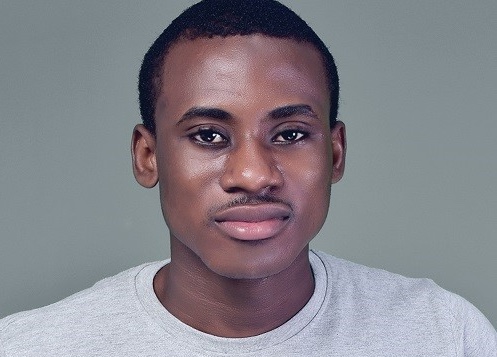
 engineer and co-founder of Nigeria-based SwiftXR, a no-code web-based platform.)
Like many kids, Hammed Arowosegbe grew up fascinated by planes. He dreamt of becoming an aeronautical engineer, but life took a different turn, a fun one. Think ship steering simulators, but more on that later. Today, he is a senior extended reality (XR) engineer and co-founder of Nigeria-based SwiftXR, a no-code web-based platform that has powered over 2 million immersive experiences globally. That journey, from studying mechanical engineering at the University of Ilorin to enabling the deployment of immersive technology at scale, didn’t follow a straight line.
Now, as AI reshapes the industry he works in, Arowosegbe is once again adapting and evolving. This shift comes at a time when Meta has announced the closure of Horizon Worlds, its virtual reality (VR) platform, by June 15, 2026, as it pivots toward mobile-first experiences and AI-powered wearables like its Ray-Ban glasses. Today, Arowosegbe holds a Master’s in Artificial Intelligence from the University of Liverpool, which he earned while working at a French startup and running SwiftXR at the same time. “It was stressful, but it was something I was very interested in, and it was quite fun for me,” he admits.
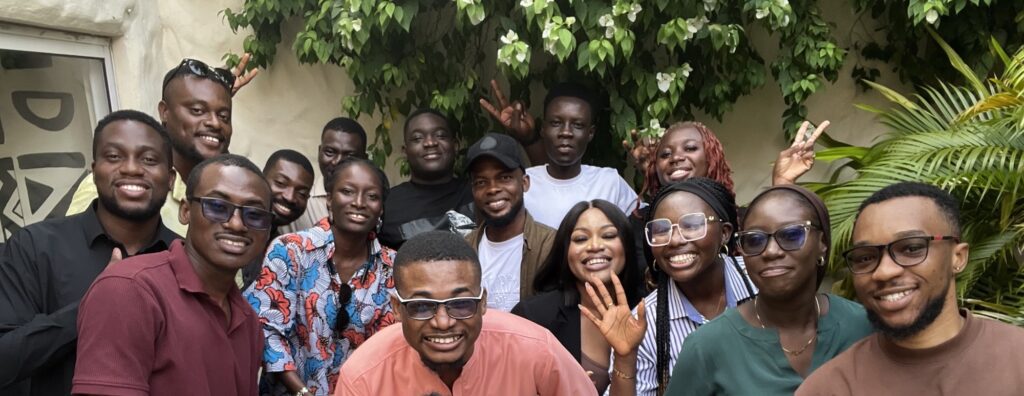
Speaking of fun, I experienced SwiftXR’s spirit of creating fun through immersion firsthand at Africacomicade’s Nigerian edition of the Gamathon in 2025. The SwiftXR team hosted a workshop where we got a glimpse of their technology through digital fashion. We tried on sunglasses and bucket hats using AR. At one point, the bucket hats sat on our faces instead of our heads. It was funny, but also a quick fix. During Industry Day, I interacted with one of their dancing 3D characters, augmented right next to their stand. Both experiences were simple, fun, and memorable.
Changing expectations
For Arowosegbe, companies like Africacomicade have played a big role in SwiftXR’s growth. “Africacomicade has always been a launch pad for us from day one,” he says. From recruitment to partnerships, the impact has been clear. It even led to a connection with LG Africa, whose website now features SwiftXR’s work.

But before e-commerce, SwiftXR focused on virtual tours. Arowosegbe shared how they worked with Marriott International during a launch in Lagos. They built an AR experience that allowed users to view hotel rooms in their own space through the web. It was fast to deploy and easy to access.This made sense at the time. During COVID-19, virtual tours became one of the few ways people could explore spaces from home. But as things opened up, expectations changed.
Stronger engagement
Arowosegbe found that users began to want more quality and polish, yet WebXR had its limits.“WebXR can’t create sophisticated visualizations because it’s limited in compute,” he says. This led to a shift from real estate to e-commerce. Instead of modelling entire spaces, the focus moved to single products. “If we can make one product highly optimized for the web, that works for e-commerce stores,” he explains. It also led to stronger engagement. One of their first e-commerce clients was Nigerian furniture brand Taeillo.
That pivot was built on an earlier version while he was still an undergraduate at the university. During an internship at OCI Automation, Arowosegbe was introduced to automation and 3D systems. This is where he discovered Unity and how code could control 3D models. He worked on building what was then one of the first ship steering simulators in Nigeria. The project was done in collaboration with the Nigerian College of Fisheries. “We built a physical ship dashboard, and in front of it was a large screen,” he explains. “Trainees could see the ship moving and learn how to steer without being on a real ship.”
Be your best
That moment stuck with him. “With Unity, you can do so much: games, AR, VR, simulations,” he says. He chose to focus on AR and VR because they felt new and full of possibilities. Since then, he has worked with global and regional companies such as PwC, Marriott International, Mastercard, Lloyds Banking Group, Globacom, and L’Oréal. He explains that one key lesson stands out from his experience with these organizations and that is, make your minimum viable product (MVP) count.
“People say your MVP doesn’t need to be perfect,” he says. “But I think the opposite is true. I’ve learnt it needs to be your best.” A weak first version can break trust. “When you show something substandard, clients ask, ‘Is this it?’ It’s hard to recover from that.” Instead, he advises that people focus on a small part of the product and make it excellent instead of trying to do everything at once, ending up with something clunky.
Quickly demo ideas
So, nowadays, SwiftXR is also supporting game developers. Arowosegbe spoke about access and democratization. Their no-code platform helps developers create high-quality MVPs quickly. “We’ve seen people use our platform to build prototypes and present their ideas before developing the full product,” he says. And now, they are going a step further. SwiftXR is working on an AI prompt engine that allows users to generate experiences using simple prompts instead of drag-and-drop tools. “We’re asking how we can help people quickly demo ideas before they build.”

If Arowosegbe could speak to his younger self before starting SwiftXR, he says he would pause first. “I would say, don’t start SwiftXR,” he jokes. I laugh, and he quickly adds, “I’m just joking.” Then he gets serious. “I would tell myself to look at pricing,” he admits. In the early days, they priced their solution too low for the Nigerian market. It brought in users, but it also limited how far they could grow.
Embrace change
He explains that pricing needs to be simple and predictable, especially in markets like Nigeria, where subscription models were not as widely adopted at the time. Their model relied on one-time purchases, which made it hard for customers to plan long-term use. “It would have helped if I had simpler and more regular pricing back then,” he says.
His second lesson was just as important: focus on the customer early. “I was building what I wanted, not what customers needed.” He shrugs. “If I had done those two things, I believe we would have grown much faster.”
Despite the shifts in the industry, SwiftXR is still standing and growing. Instead of resisting change, Arowosegbe chose to embrace it. AI may be adding pressure to refine and go to market, but he remains optimistic. “It’s what makes the world interesting,” he says.
And that mindset carries into what they are building next. As we navigate this new wave of AI, his journey is a reminder to keep adapting, keep learning, and keep building. If you’re exploring immersive technology, SwiftXR is worth paying attention to.